Does anyone know details about the War Training Service. It seems they did a large majority of pilot training during WWII. Before changing their name to WTS, they were knows at the Civilian Pilot Training Program.
Specifically, I'd like to know if Hunter Flying Service was part of the WTS. I'm considering using the WTS paint scheme if I can verify that its authentic for my aircraft.
CAA War Training Service

Re: CAA War Training Service
Shannon,
Which airfield are you interested in?
Joe A
Which airfield are you interested in?
Joe A
Re: CAA War Training Service
If this is about Hunter Field in Iowa hope the below helps.
~~~~
The Airport Directory Company's 1939 Airport Directory (courtesy of Chris Kennedy)
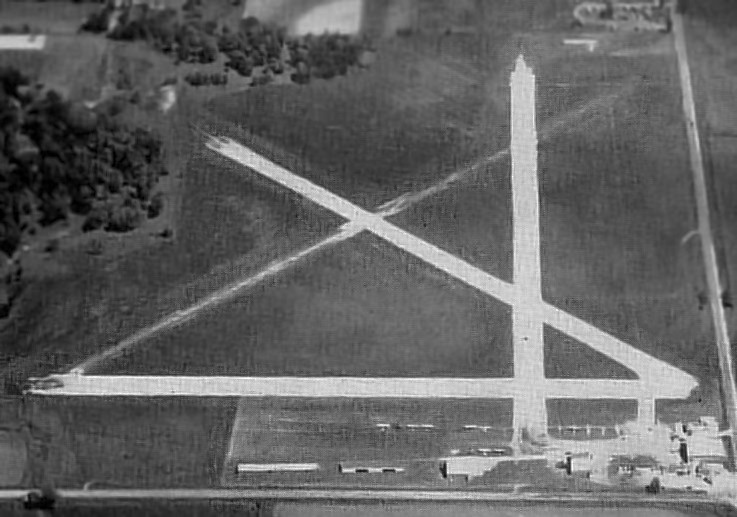
described Cedar Rapids Municipal as consisting of a 140-acre irregularly-shaped sod field,
having 4 crushed-rock runways, with the longest being a 2,250' northwest/southeast strip.
In the late 1930s, as the specter of war grew, the government stepped up its efforts to train civilian pilots,
and Cedar Rapids Municipal was used for this purpose.
When war broke out, the field served as a base for a War Training Service pilot program at Coe College
that was one of the largest in the Midwest.
At one time, there were as many as 70 instructors & 300 students in the program.
In 1944, Wathan & Hunter went into business together, forming a partnership that lasted until 1952.
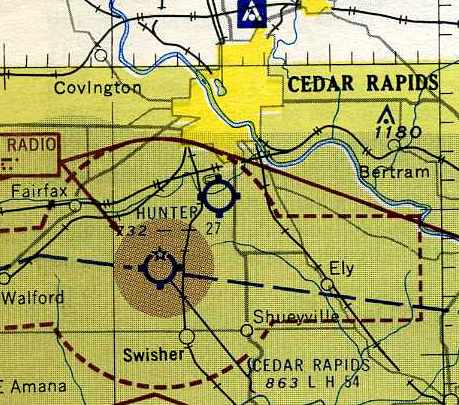
At some point between 1937-44, the airport was evidently renamed Hunter Field,
as that is how it was labeled on the March 1944 Des Moines Sectional Chart (courtesy of Chris Kennedy).
After the war, former soldiers, taking advantage of the G. I. Bill,
flocked in droves to flight training at Cedar Rapids Municipal Airport.
Due to limitations when conducting flight operations in bad weather at the relatively small Hunter Field,
a larger Cedar Rapids Airport was established in 1947 a few miles to the southwest.
But Hunter Field continued to operate as a general aviation airport for at least another decade.
For more info and photos:
http://www.airfields-freeman.com/IA/Airfields_IA_E.html
Look under Cedar Rapids at the above link, its about 2/3rds down the page.
~~~~
The Airport Directory Company's 1939 Airport Directory (courtesy of Chris Kennedy)
described Cedar Rapids Municipal as consisting of a 140-acre irregularly-shaped sod field,
having 4 crushed-rock runways, with the longest being a 2,250' northwest/southeast strip.
In the late 1930s, as the specter of war grew, the government stepped up its efforts to train civilian pilots,
and Cedar Rapids Municipal was used for this purpose.
When war broke out, the field served as a base for a War Training Service pilot program at Coe College
that was one of the largest in the Midwest.
At one time, there were as many as 70 instructors & 300 students in the program.
In 1944, Wathan & Hunter went into business together, forming a partnership that lasted until 1952.
At some point between 1937-44, the airport was evidently renamed Hunter Field,
as that is how it was labeled on the March 1944 Des Moines Sectional Chart (courtesy of Chris Kennedy).
After the war, former soldiers, taking advantage of the G. I. Bill,
flocked in droves to flight training at Cedar Rapids Municipal Airport.
Due to limitations when conducting flight operations in bad weather at the relatively small Hunter Field,
a larger Cedar Rapids Airport was established in 1947 a few miles to the southwest.
But Hunter Field continued to operate as a general aviation airport for at least another decade.
For more info and photos:
http://www.airfields-freeman.com/IA/Airfields_IA_E.html
Look under Cedar Rapids at the above link, its about 2/3rds down the page.
-
Rick Hadley
- Posts: 72
- Joined: Fri Oct 24, 2008 14:31
- Location: East Central Iowa
- Contact:
Re: CAA War Training Service
Hunter Field continued in operation until about 1959 or 60 when Dan Hunter retired and sold the land. I remember driving by there as a kid. Dan and my wife's grandfather, Karl Fischer, were two of the early barnstormers in Iowa, ex-WWI military pilots. Karl continued flying until the Depression and family demands brought it to a halt. He went on to become the first Public Safety Commissioner in Iowa, and when he was recalled to active duty for WWII, became the military governor of Sardinia after the Allied occupation. Both Karl and Dan's flying activities are mentioned in Ann Pellegreno's book, "Iowa Takes To The Air, Vol. 2".
Rick
11AC Chief
NC86196

11AC Chief
NC86196
Re: CAA War Training Service
The military service record I have for my L-3 indicates that Hunter Flying Service was the first "owner" of it in 1942. It later went to Hamilton, TX (also a Hunter location) before being assigned to a few other locations.
I'm trying to figure out what would be the true authentic paint scheme - the OD of the army or the OD and Orange/yellow of the WTS.
I'm trying to figure out what would be the true authentic paint scheme - the OD of the army or the OD and Orange/yellow of the WTS.
Shannon
http://www.flyataildragger.com
http://www.flyataildragger.com
Re: CAA War Training Service
The Squadron Signal book, US Liaison Aircraft in Action by Al Adcock has a National Archives photo of a WTS L-3C. To quote the whole caption:
The Civil Aeronautics Administration (CAA) War Training Service (WTS) used this modified L-3C (28/WTS439) in 1943. Thin wooden panels replaced the rear glass area and no radio is fitted. This L-3C is painted overall Olive Drab with Orange-Yellow cowl, rudder, and wing tips. WTS-439 is Black on the rudder and Orange-Yellow pn the left wing undersurface, while 28 is Orange-Yellow on the vertical stabilizer. The WTS received most of the 490 L-3C's Aeronca built during 1943.
My guess is "439" is either a WTS plane number, or a abbreviated AAF s/n- "28" being the WTS "unit" number
To add, there is what appears to be a CAA/WTS roundel in the usual pre-late '43 locations on wings and fuselage. The orange-yellow looks like it comes in from the tip of the wing to the second rib.
On the rudder, the lettering is maybe 6" and centered, arranged like this:
WTS
439
"28" is centered on the vertical stabilizer in maybe 12" lettering
The "WTS 439" (no hyphen) appears to be 24" in height and with 4" thickness centered in the chord and span of the left wing bottom. Not sure about the top, but since visibility was vital in these planes it is probably there as a top "mirror image"
As to those wooden panels- hmm... Aeronca factory- or field mod/repair?
Since you have the military record info (include as much "unit" and location info you can muster as well) , the National Archives might have a photo of it. It's worth a shot.
The Civil Aeronautics Administration (CAA) War Training Service (WTS) used this modified L-3C (28/WTS439) in 1943. Thin wooden panels replaced the rear glass area and no radio is fitted. This L-3C is painted overall Olive Drab with Orange-Yellow cowl, rudder, and wing tips. WTS-439 is Black on the rudder and Orange-Yellow pn the left wing undersurface, while 28 is Orange-Yellow on the vertical stabilizer. The WTS received most of the 490 L-3C's Aeronca built during 1943.
My guess is "439" is either a WTS plane number, or a abbreviated AAF s/n- "28" being the WTS "unit" number
To add, there is what appears to be a CAA/WTS roundel in the usual pre-late '43 locations on wings and fuselage. The orange-yellow looks like it comes in from the tip of the wing to the second rib.
On the rudder, the lettering is maybe 6" and centered, arranged like this:
WTS
439
"28" is centered on the vertical stabilizer in maybe 12" lettering
The "WTS 439" (no hyphen) appears to be 24" in height and with 4" thickness centered in the chord and span of the left wing bottom. Not sure about the top, but since visibility was vital in these planes it is probably there as a top "mirror image"
As to those wooden panels- hmm... Aeronca factory- or field mod/repair?
Since you have the military record info (include as much "unit" and location info you can muster as well) , the National Archives might have a photo of it. It's worth a shot.
Dennis Nichols
Versailles, KY
Versailles, KY
Re: CAA War Training Service
Thanks, Dennis. That's the kind of info I was looking for.
Shannon
http://www.flyataildragger.com
http://www.flyataildragger.com
Re: CAA War Training Service
You're welcome. For what its worth, I'm going to let the air show crowd clear out of Dayton and head up to the AF Museum while I'm on vacation this week. I'll be looking for photos and info not just on production L-3's-but also the Tandems, Defenders, Chiefs and Super Chiefs that we impressed under the L-3 designation. Whatever I come across of note, I'll offer up to Joe.
Dennis Nichols
Versailles, KY
Versailles, KY