If this is about Hunter Field in Iowa hope the below helps.
~~~~
The Airport Directory Company's 1939 Airport Directory (courtesy of Chris Kennedy)
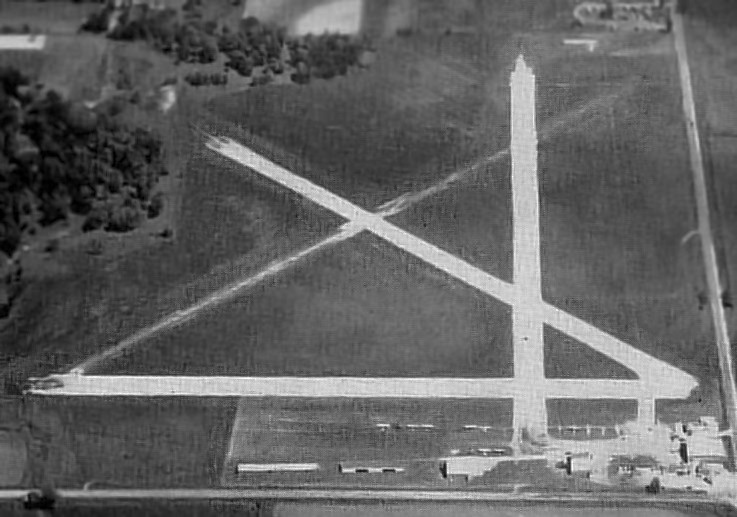
described Cedar Rapids Municipal as consisting of a 140-acre irregularly-shaped sod field,
having 4 crushed-rock runways, with the longest being a 2,250' northwest/southeast strip.
In the late 1930s, as the specter of war grew, the government stepped up its efforts to train civilian pilots,
and Cedar Rapids Municipal was used for this purpose.
When war broke out, the field served as a base for a War Training Service pilot program at Coe College
that was one of the largest in the Midwest.
At one time, there were as many as 70 instructors & 300 students in the program.
In 1944, Wathan & Hunter went into business together, forming a partnership that lasted until 1952.
At some point between 1937-44, the airport was evidently renamed Hunter Field,
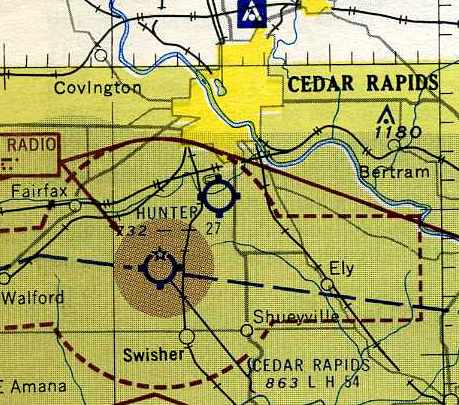
as that is how it was labeled on the March 1944 Des Moines Sectional Chart (courtesy of Chris Kennedy).
After the war, former soldiers, taking advantage of the G. I. Bill,
flocked in droves to flight training at Cedar Rapids Municipal Airport.
Due to limitations when conducting flight operations in bad weather at the relatively small Hunter Field,
a larger Cedar Rapids Airport was established in 1947 a few miles to the southwest.
But Hunter Field continued to operate as a general aviation airport for at least another decade.
For more info and photos:
http://www.airfields-freeman.com/IA/Airfields_IA_E.html
Look under Cedar Rapids at the above link, its about 2/3rds down the page.